
Find Virginia Public Records Online
Virginia public records cover a wide range of official documents held by state and local government bodies. Court filings, land records, vital records, criminal history, business registrations, and professional licenses are all part of what Virginia makes available to the public. Under state law, most records are open by default, and you can search many of them online right now. This guide explains where to look, what you can access, how to make a formal request, and what the law says about your rights when seeking public records in Virginia.
Virginia Public Records at a Glance
Virginia FOIA Overview
The Virginia Freedom of Information Act, found at § 2.2-3700 et seq. of the Code of Virginia, gives citizens the right to inspect or receive copies of public records held by any public body. A public record is any writing or recording, whether on paper, in an electronic file, on audio or video, or in any other format, that is made or held by a government body in the course of public business. The law covers state agencies, local governments, courts, and their officers and employees.
All public records are presumed open. A record can only be withheld if a specific statutory exemption applies. FOIA requires that the law be read broadly in favor of access, and any exemption must be read narrowly. You do not need to give a reason for your request. You do not need to cite FOIA in your request letter. Any citizen of Virginia, and any member of the media serving Virginia, can request records under this law.
Public bodies must respond within five working days of getting your request. If it is not possible to meet that deadline, the agency must tell you promptly and has an additional seven working days to complete the response. Under § 2.2-3704, you have the right to ask for an estimate of charges before any copies are made. If you think your rights have been violated, you can file a petition in district or circuit court to compel compliance.
The FOIA Advisory Council fields questions from requesters and agencies alike. You can reach them by email at foiacouncil@dls.virginia.gov or by phone at (804) 698-1810, toll free at 1-866-448-4100. The Council can give nonbinding advisory opinions when disputes arise. For more help with open records questions in Virginia, the Virginia Coalition for Open Government is a nonprofit that educates citizens about their rights and how to use them.
The Virginia Coalition for Open Government at opengovva.org offers guides, sample request letters, and answers to common FOIA questions for anyone trying to access public records.
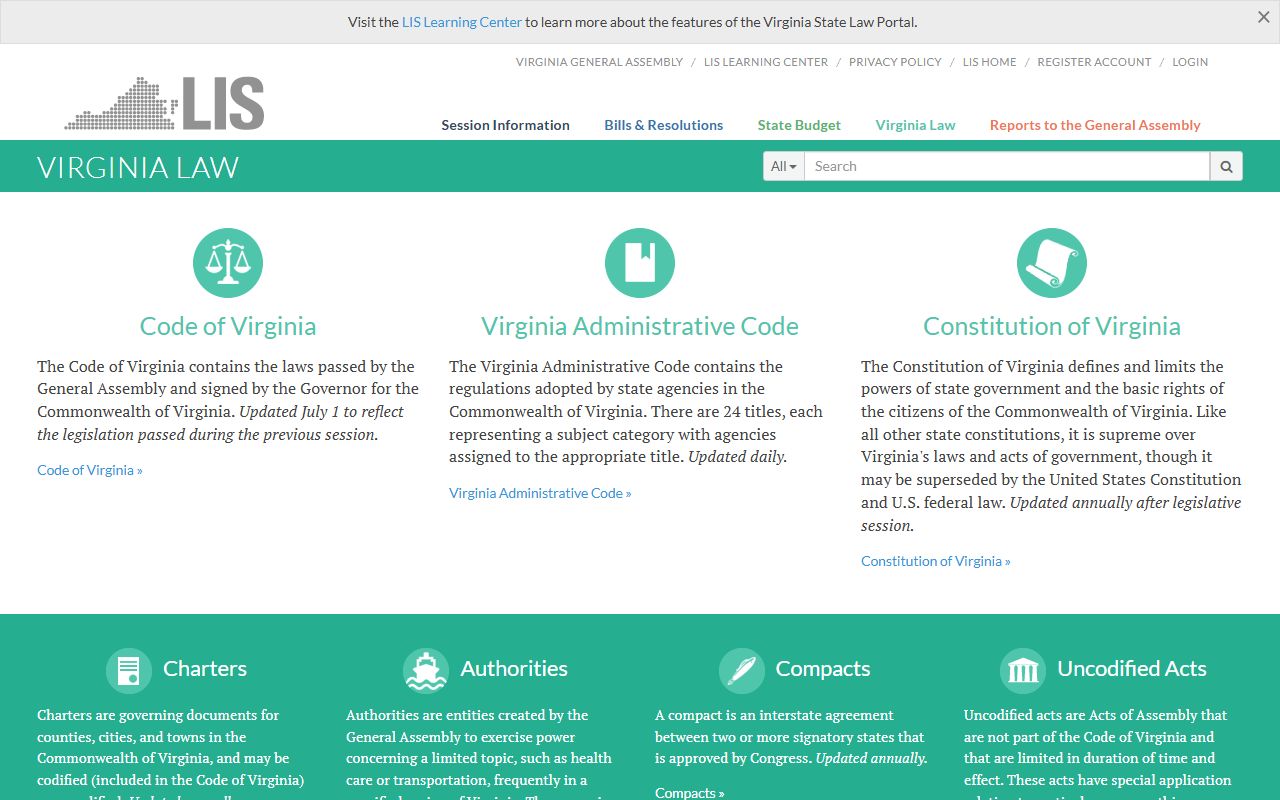
The full text of the Code of Virginia, including all FOIA statutes and exemptions, is searchable at law.lis.virginia.gov.
Virginia Court Records Online
Virginia court records are open to the public under § 16.1-69.54:1 and § 17.1-208 of the Code of Virginia. These statutes allow anyone to inspect court documents including case dockets, complaints, motions, orders, and judgments. The Virginia Judicial System supports a network of circuit courts, general district courts, and juvenile and domestic relations district courts across 31 judicial circuits and 32 districts.
For online case searches, the main tool is the Circuit Court Online Case Information System (CJIS). You can search by party name, case number, or hearing date. Searches run by individual court, not statewide, so you need to know which court handled the case. The system works with Chrome, Firefox, and Safari. It shows case dockets, hearings, dispositions, and pleadings and orders tabs. Most current case files have been scanned and can be reviewed on public terminals at the courthouse.
Note: Fairfax Circuit Court does not use the statewide CJIS system. To look up cases there, contact the Fairfax Circuit Court directly at (703) 246-4111 or visit fairfaxcounty.gov/circuit.
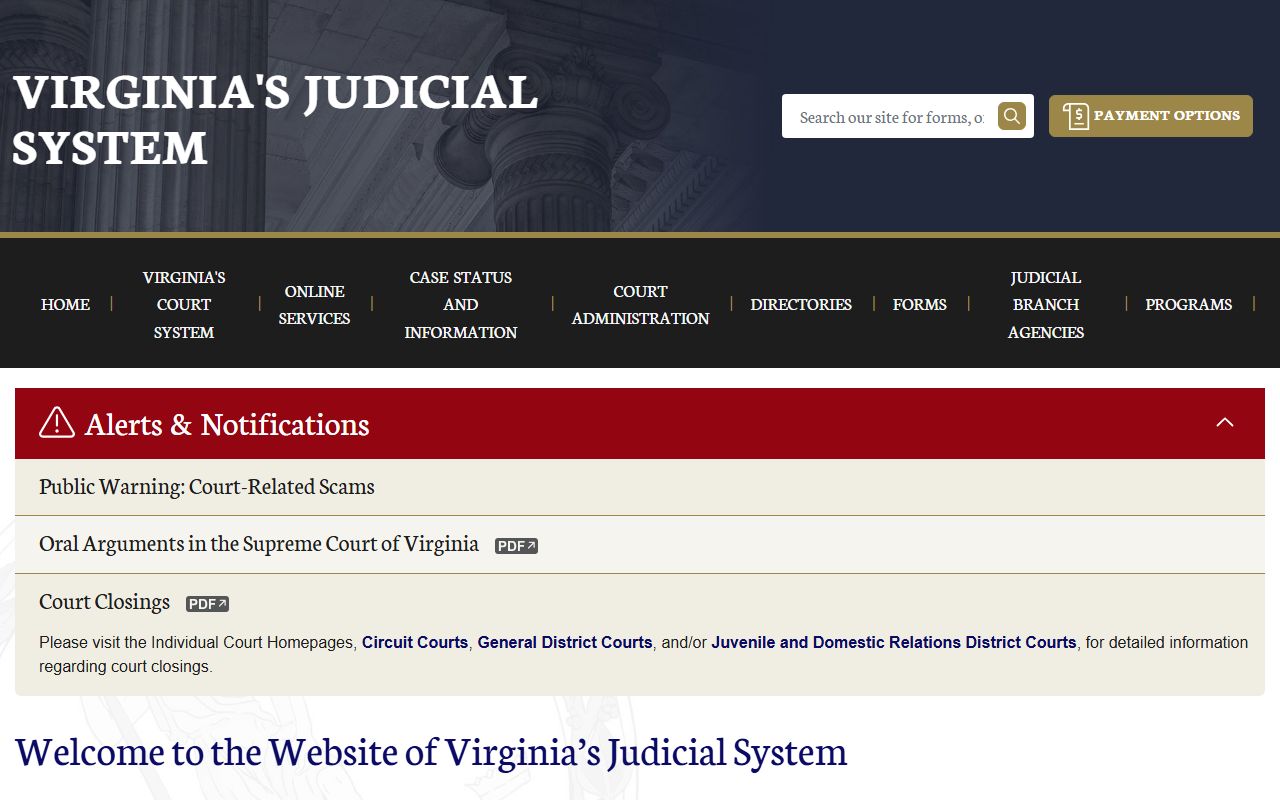
The Virginia Judicial System website links to all court case search tools, including CJIS and the General District Court Online Case Information System.
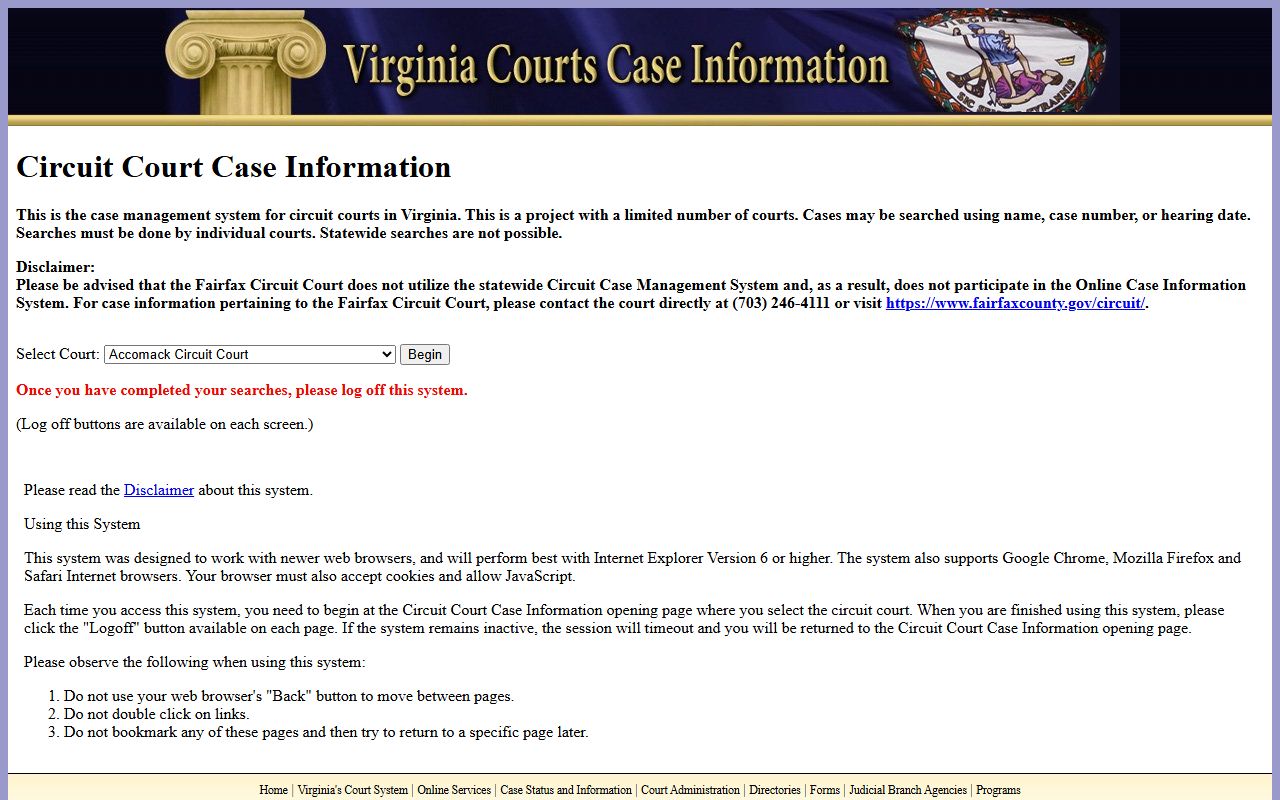
The Circuit Court case search at eapps.courts.state.va.us lets you search by name, case number, or date across participating Virginia circuit courts.
The statewide Online Case Information System (OCIS) 2.0 also includes a free Case Alert Subscription System (CASS). By signing up, you get text and email notifications whenever a case you follow gets updated. This is useful for tracking active cases in Virginia's trial courts.
Virginia Land Records
Land records in Virginia are filed with Circuit Court Clerks and are available through the Virginia Secure Remote Access (SRA) system. This system provides remote access to land records from participating circuit court clerk offices across the Commonwealth. Access requires registration and is available on a subscription or pay-per-use basis.
The SRA system covers a broad range of document types. Deeds, deeds of trust, mortgages, UCC filings, judgments, wills, plats and surveys, marriage licenses, military discharge records (DD-214), and trade name registrations are all in the system. You can search by name, document type, date range, or book and page number depending on the jurisdiction. Coverage dates vary by county.
For older records, the system has a Historical Records Search function for materials prior to September 1993 (1996 for wills). Some jurisdictions have indexes going back to the 1700s. The records are tied to the clerk's office archives and can be viewed online or in person at the courthouse on public terminals.
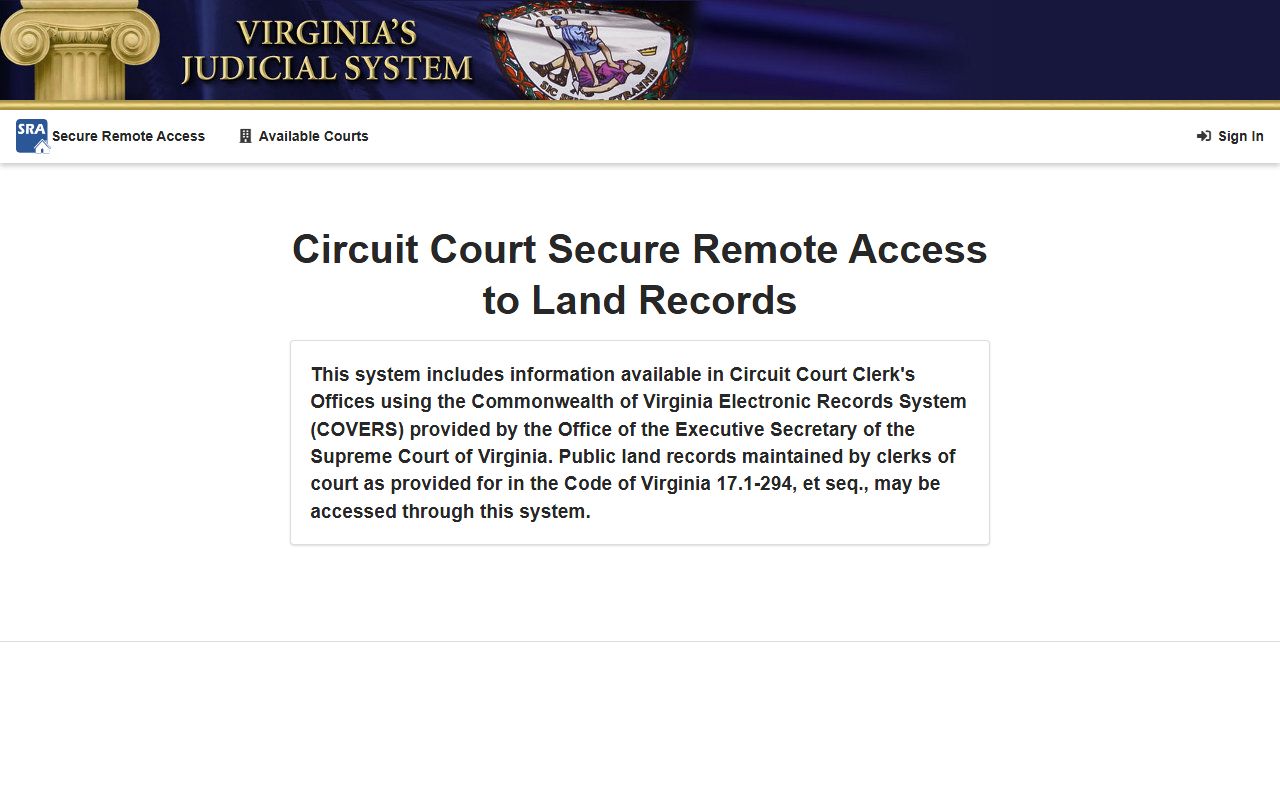
The SRA system is the main portal for remote access to Virginia land records filed with circuit court clerks statewide.
Virginia Vital Records
The Office of Vital Records at the Virginia Department of Health handles certified copies of birth, death, marriage, and divorce certificates. The walk-in office is at 8701 Park Central Drive, Suite 100, Richmond, VA 23227, open Monday through Friday, 7:00 AM to 4:00 PM. The customer care center is available by phone at (804) 662-6200, Monday through Friday, 8:00 AM to 4:30 PM.
Each certified copy costs $12. Payment is accepted by check, money order, credit card, mobile pay, or cash. Checks and money orders should be made payable to State Health Department. Mailed requests go to VDH, Office of Vital Records, P.O. Box 1000, Richmond, Virginia 23218-1000. Include your signed request, a legible copy of your photo ID, and the $12 fee per copy.
Not every record is open to the public right away. Birth records become public under § 32.1-272 of the Code of Virginia 100 years after the event. Death, marriage, and divorce records become public 25 years after the event. Before those windows, only immediate family members can request certified copies. That group includes the person named on the record (if adult), their spouse, parents, children, siblings, and grandparents. A legal guardian with proof of custody may also request birth records for a minor.
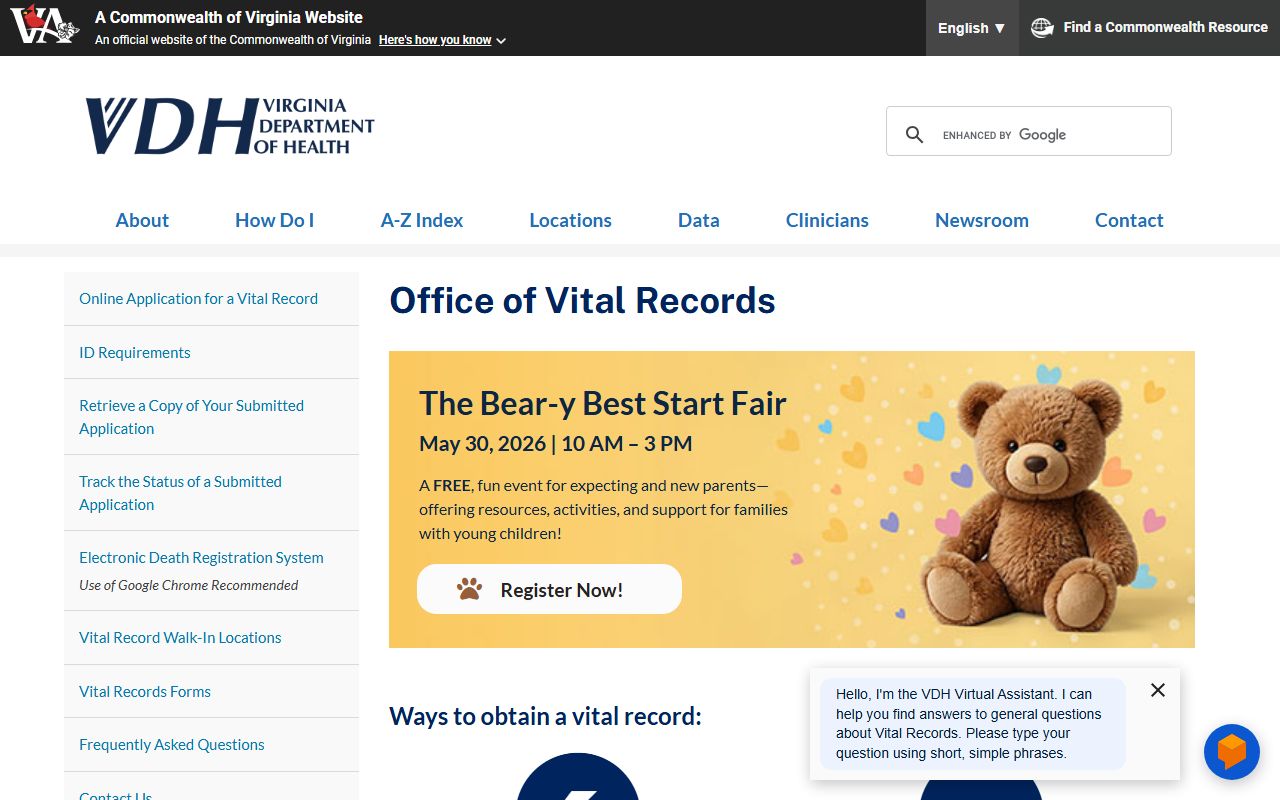
The Virginia Department of Health vital records page has online application links, fee information, and instructions for mail and walk-in requests.
Virginia Criminal Records
Criminal history records in Virginia are maintained by the Virginia State Police through the Central Criminal Records Exchange (CCRE). Under § 19.2-389 of the Code of Virginia, criminal history information is restricted. Only authorized entities and the person named in the record can request a criminal history check. You can request your own Virginia criminal record by writing to: Department of State Police, P.O. Box 85076, Richmond, VA 23261-5076.
The Virginia State Police also maintains the Sex Offender Registry, which is searchable by the public online at no charge. FOIA requests to the Virginia State Police can be submitted through their web portal at vsp.nextrequest.com. That system helps track what documents are available and what has been released.
The Virginia State Police website includes the Sex Offender Registry search and information on how to request your own criminal history from the CCRE.
Business and Professional License Records
The Virginia State Corporation Commission (SCC) is the primary source for business entity records in Virginia. Through the SCC's Clerks Information System (CIS Online), you can search for corporations, LLCs, limited partnerships, and other registered entities by name, entity type, or SCC ID number. Results show entity status, registered agent information, and filing history. The SCC also regulates insurance companies, state-chartered banks and credit unions, and securities dealers, and complaint records for those industries are public.
For healthcare professionals, the Department of Health Professions (DHP) operates an online license lookup for the more than 500,000 practitioners it regulates across 62 professions. The 13 health regulatory boards under DHP cover medicine, nursing, dentistry, pharmacy, physical therapy, social work, and more. You can search by name, license number, or profession to see license status, expiration date, and any disciplinary actions on file.
Non-healthcare professional licenses are handled by the Department of Professional and Occupational Regulation (DPOR), which covers more than 40 professions including architects, engineers, land surveyors, professional counselors, and marriage and family therapists. DPOR provides public license verification online, including any complaints or disciplinary actions against licensees.
The SCC business entity search is the fastest way to look up registered businesses, check entity status, and find registered agent details for any Virginia company.
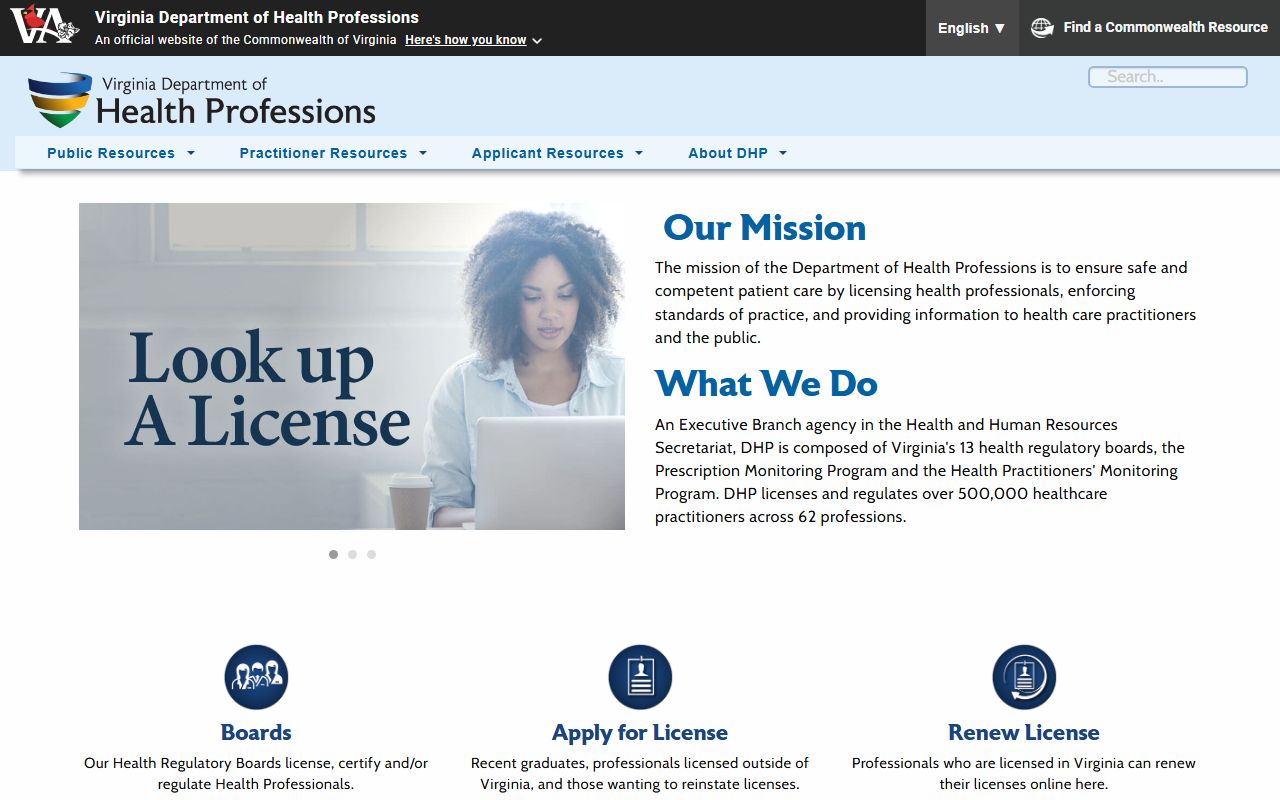
DHP's license lookup tool covers all health regulatory boards and shows current license status, expiration, and any public disciplinary history for Virginia healthcare practitioners.
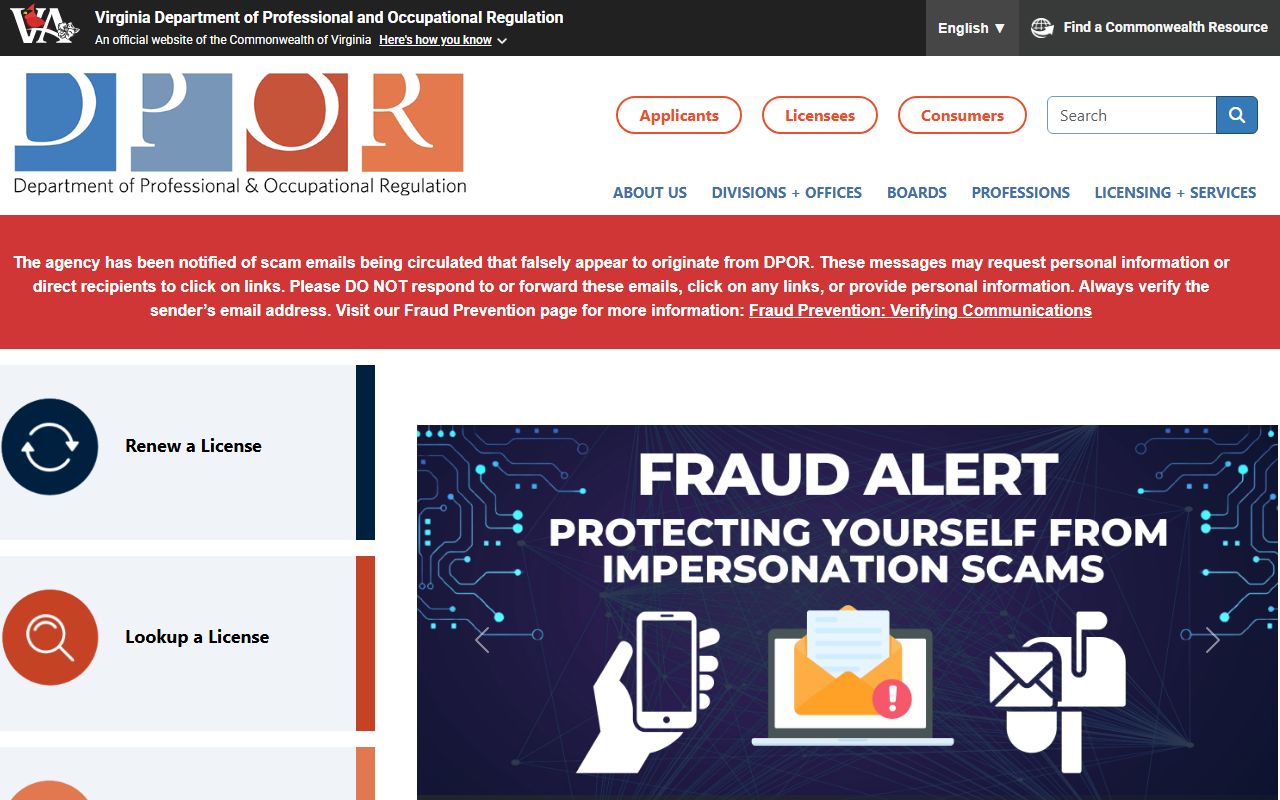
DPOR's public license verification system allows anyone to check the credentials and complaint history of licensed contractors, designers, engineers, and other regulated professionals in Virginia.
Historical Records and Archives
The Library of Virginia holds over 100 digital collections and serves as the state archives for Virginia government records. The Library is a key resource for genealogy, property history, and legal research going back to the colonial era. Collections include historic newspapers through Virginia Chronicle, photographs, maps, and government documents from state agencies going back centuries.
One of the most significant collections is the Chancery Records Index, which contains scanned images of chancery court cases from 1804 to 1951. The bulk of that collection spans 1831 through 1921. You can access it at lva.virginia.gov/chancery. These records include civil equity cases that often contain property disputes, estate matters, and family law proceedings. The originals are held in the Clerk's Archives. The Library also manages records for state and local governments through its Records Management Services program.
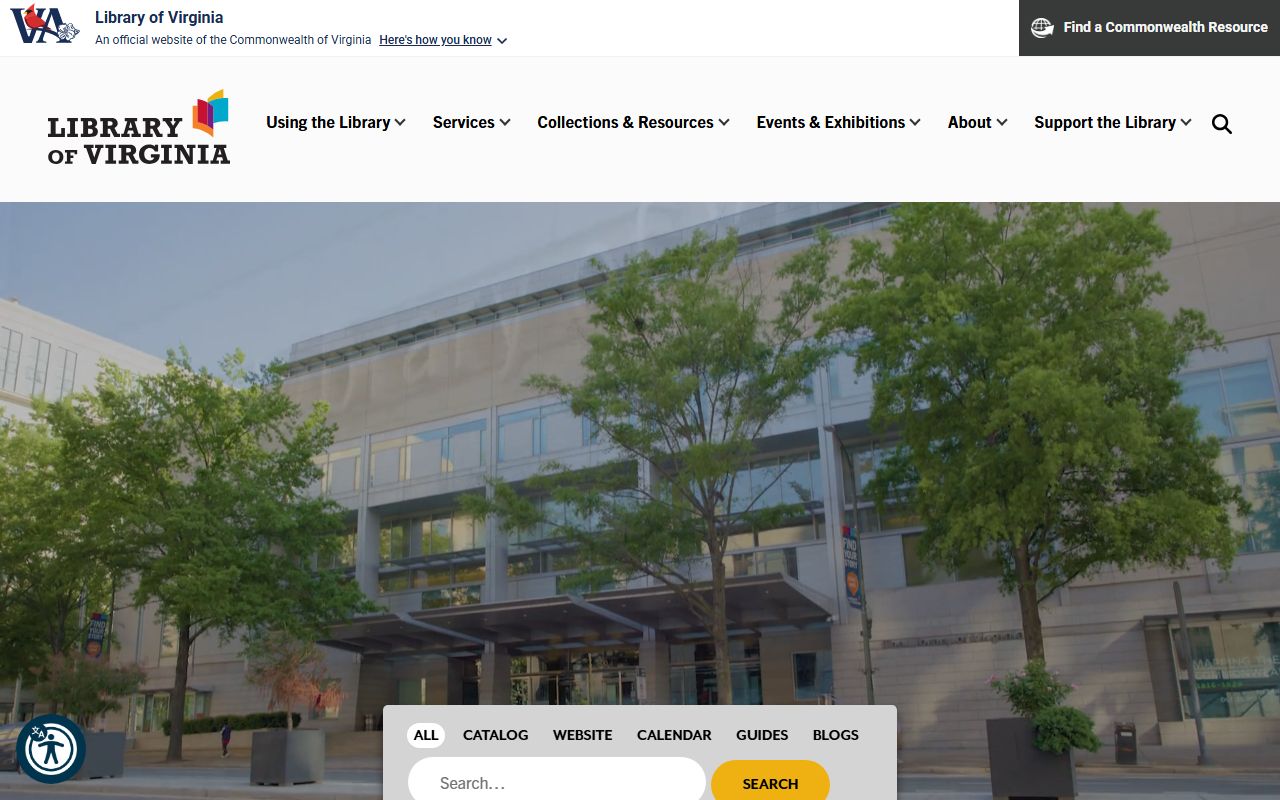
The Library of Virginia provides free access to many digital collections and is the best starting point for historical public records research in the Commonwealth.
How to Request Virginia Public Records
Making a public records request in Virginia is straightforward. You do not need a lawyer. You do not need to use a special form. You just need to describe the records you want with reasonable clarity. Below is a general outline of how the process works.
First, figure out which agency holds the records you need. Court records go to the clerk of the court where the case was filed. Vital records go to the VDH Office of Vital Records. Land records are at the circuit court clerk in the relevant county. Criminal history goes to the State Police. Business records go to the SCC. If you are unsure, the FOIA Advisory Council at (804) 698-1810 can point you in the right direction.
Send your request in writing, either by email or mail, to the agency's FOIA coordinator. Include a return address, a phone number, and the specific records you want. You do not need to cite FOIA, but it can help move things along. The agency must respond within five working days. They may provide the records, deny the request with an explanation citing a specific statutory exemption, or ask for additional time.
Under § 2.2-3704, you have the right to ask for a cost estimate before you commit to paying for copies. Fees are generally reasonable, and many records can be viewed in person at no charge. If your rights are denied, you can file a legal action in district or circuit court, or ask the FOIA Advisory Council for a nonbinding opinion on whether the denial was proper.
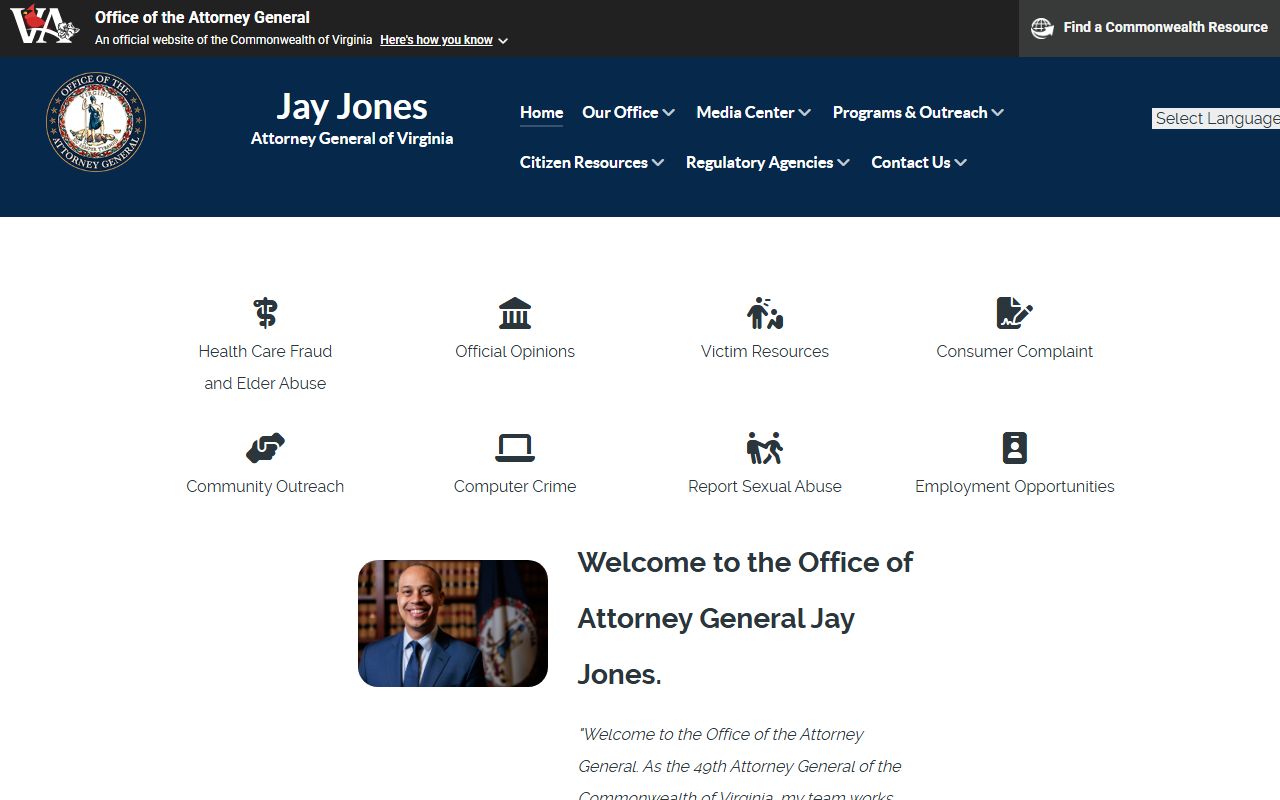
The Virginia Attorney General's Office enforces consumer protection laws and maintains public records of legal opinions and other official actions subject to FOIA.
Other Virginia Public Record Sources
Several other state agencies maintain records the public can access. The Virginia Department of Motor Vehicles (DMV) holds driver and vehicle records. Individuals can request their own driving history online. Driver records show violations, accidents, license status, and points. Vehicle registration and title records are also maintained by the DMV, though access to another person's records is restricted under state and federal law.
The Virginia Employment Commission (VEC) administers unemployment insurance benefits and maintains employment-related records. Labor market information and workforce data are publicly available through Virginia Works. The VEC's Customer Self Service system handles 1099-G tax forms for those who received unemployment benefits.
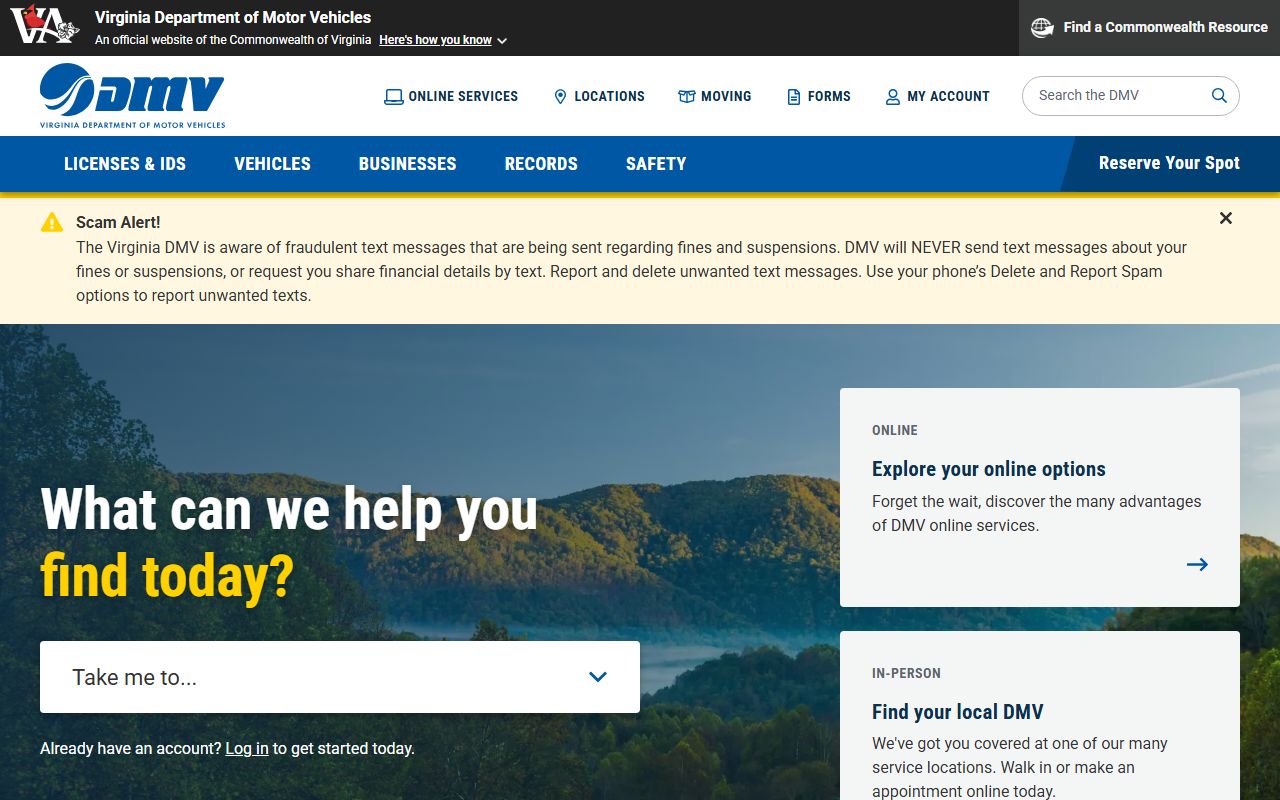
The Virginia DMV offers online tools to renew licenses, update addresses, and request your own driving record or vehicle registration history.
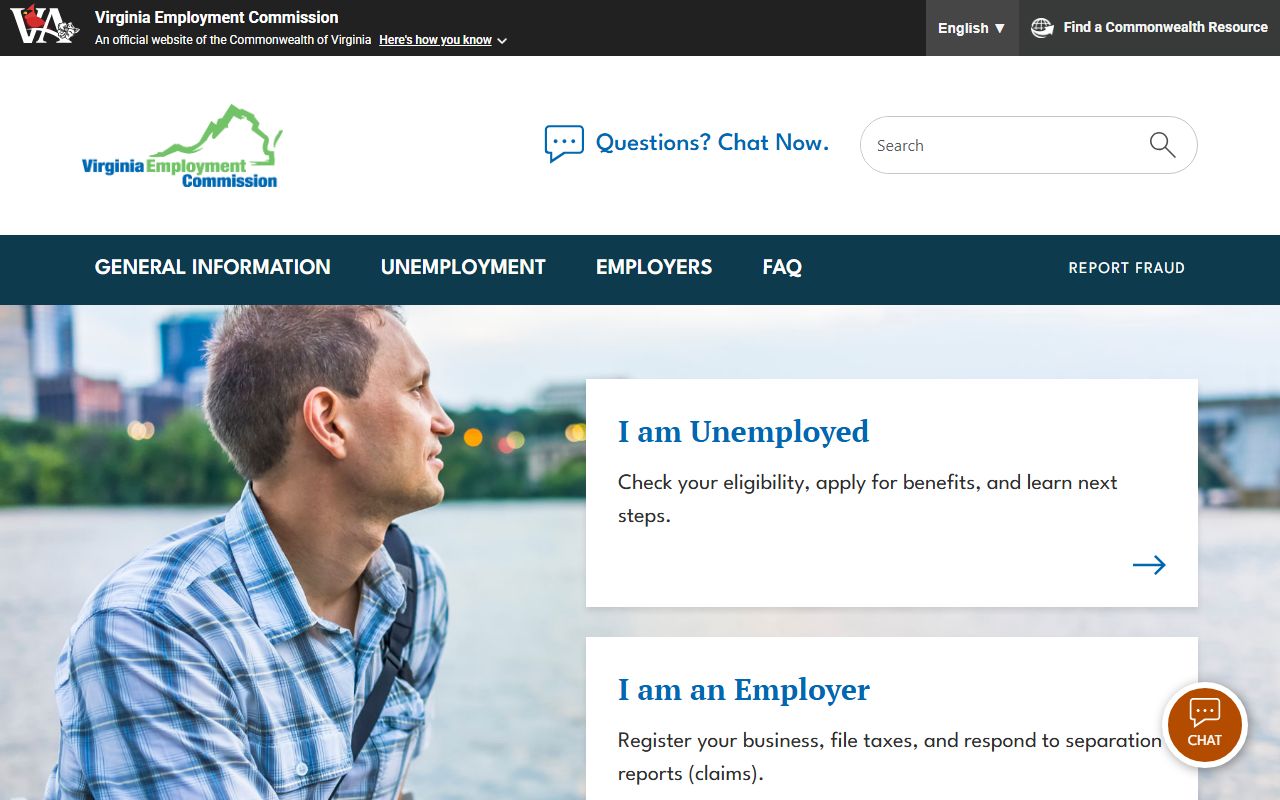
The Virginia Employment Commission maintains unemployment benefit records and provides public labor market data through its online portal.
Browse Virginia Public Records by Location
Virginia public records are held at the county or city level for most court and property filings. Select a county or independent city below to find local courthouse contacts, search tools, and resources for that area.
Virginia Counties
Each of Virginia's 98 counties has its own circuit court clerk handling land records, court filings, and related documents. Below are the most populous counties in the state.
Virginia Independent Cities
Virginia's 39 independent cities operate as separate jurisdictions from the surrounding counties. Each city maintains its own circuit court clerk for public records filings.